Scar Revision Rhinoplasty
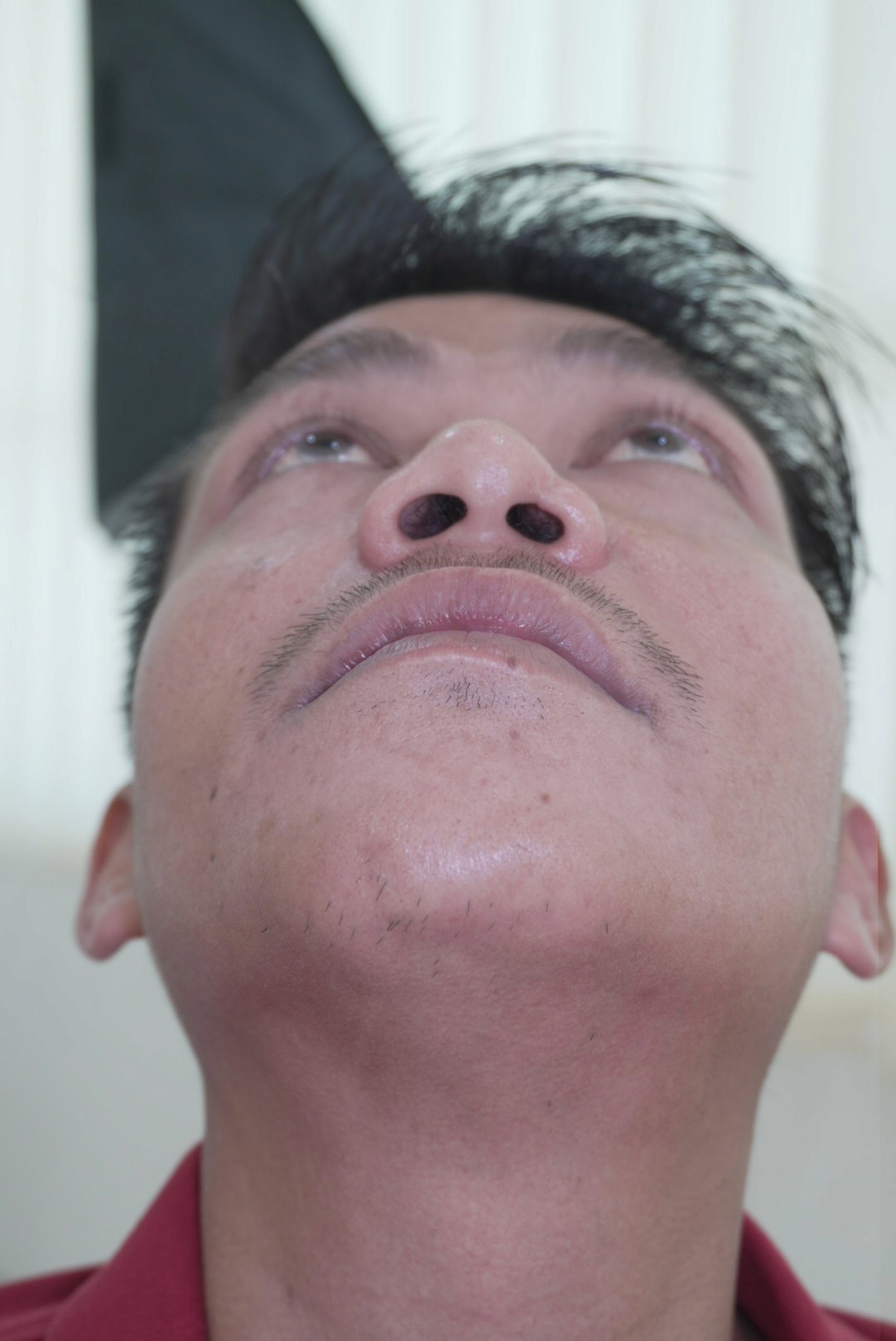
This case involves a 23-year-old male patient with a long-standing traumatic deformity of the left nasal ala. At the age of 7, he sustained a severe facial injury when a tree branch fell onto his face, resulting in a full-thickness laceration of the left nasal ala. This healed with significant scarring, leading to retraction of the alar rim and distortion of the left nostril architecture, effectively dividing the nostril into irregular compartments. The patient sought surgical correction to restore a single, patent nostril opening and achieve improved symmetry between both nasal alae.
Category
Scars
Year
2024
Timeline
1 year
Presentation & Anatomical Deficit
This case presented a complex secondary nasal reconstruction of a very old injury, with scarring persisting for more than a decade. The left alar rim was significantly contracted and tethered by dense scar tissue, resulting in both functional distortion of the nasal aperture and clear aesthetic asymmetry. The key challenge was to release and reconstruct a stable, symmetric alar rim while restoring a single, unified nostril aperture on the affected side. Long-standing scars of this nature are often fibrotic, poorly vascularised, and resistant to simple revision techniques, increasing the risk of relapse or persistent asymmetry. In addition, the patient had high aesthetic expectations, particularly regarding symmetry between both nostrils and nasal ala rims. Achieving predictable improvement in such chronic post-traumatic deformity required careful planning to balance scar release, structural support, and soft tissue redraping.


The Surgical Plan
A meticulous scar revision was performed with careful release of contracted scar bands tethering the left nasal ala. The distorted alar rim was reconstructed to re-establish a more natural curvature and to unify the previously segmented nostril into a single, continuous opening. To improve soft tissue quality and contour, autologous fat grafting was performed to the affected area, providing both volume restoration and improved tissue pliability. This helped to soften the scarred tissue envelope and support long-term contour stability. Intraoperatively, emphasis was placed on achieving symmetric alar positioning, restoring nasal rim continuity, and ensuring balanced nostril shape relative to the unaffected side. Given the chronic nature of the deformity, careful handling of scar tissue was essential to minimise tension and reduce the risk of recurrent contraction.


Clinical Outcome & Restoration
The postoperative course was documented through a structured photographic timeline, including preoperative assessment, early healing at one week following suture removal, and long-term follow-up at one year. At one week post-suture removal, early improvement in alar position and nostril continuity was already visible, although mild swelling and residual healing changes were present. Over time, progressive scar maturation and tissue remodelling resulted in a more refined nasal contour. At one year postoperatively, the left nasal ala demonstrated significant improvement in symmetry compared to the contralateral side, with restoration of a single, unified nostril opening and a more natural alar rim curvature. The overall nasal appearance was more balanced and harmonious.